
The Wildlife of Patagonia
Know more about the local animals!
Get closer to the animals that make Patagonia one of the world’s most awe-inspiring destinations.
Every photo below was taken during our tours, in their natural habitat,no cages, no tricks, just raw and wild beauty.
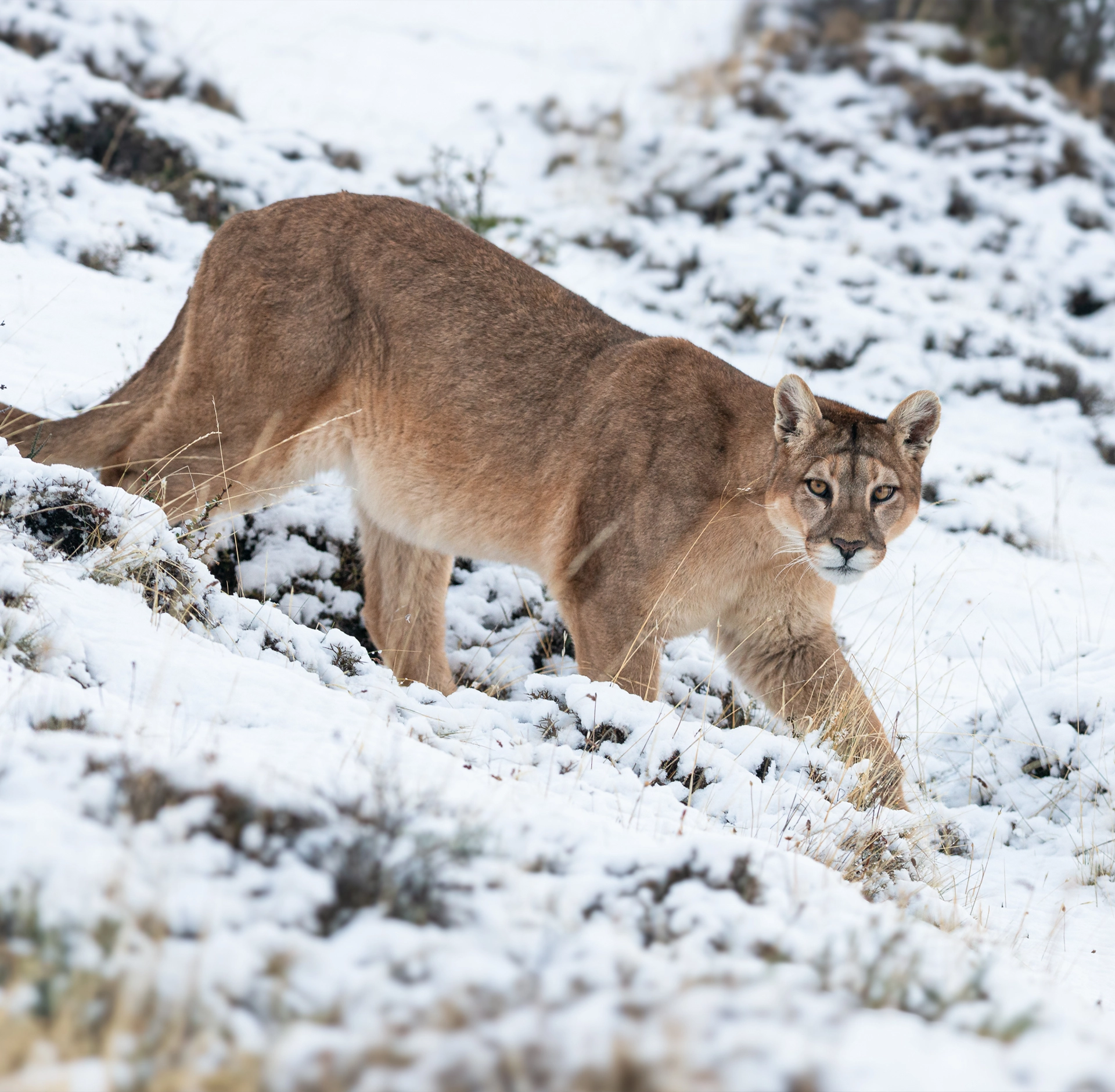
Puma
Guanaco
Andean Condor
Culpeo Fox
Magellanic Woodpecker
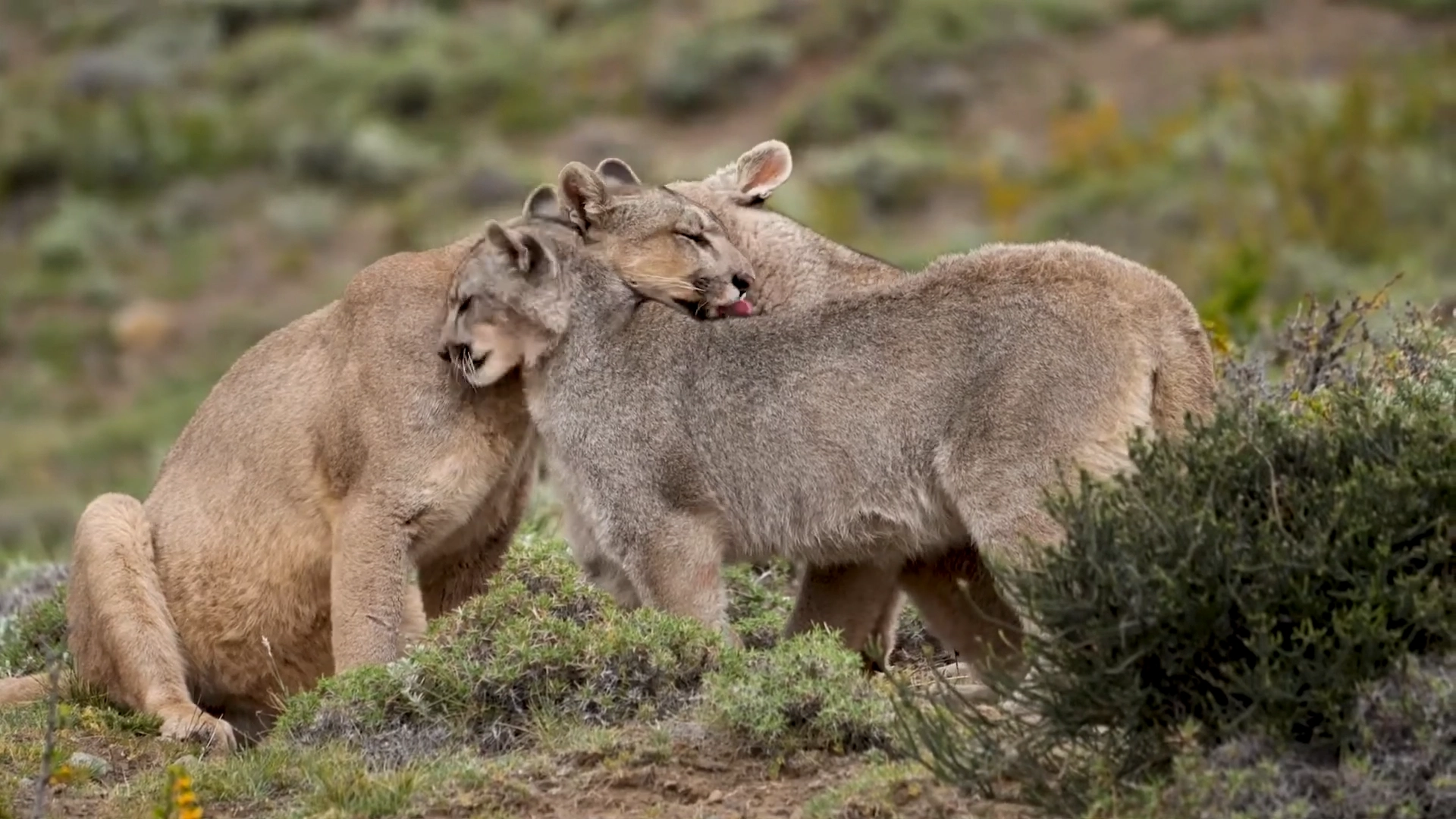
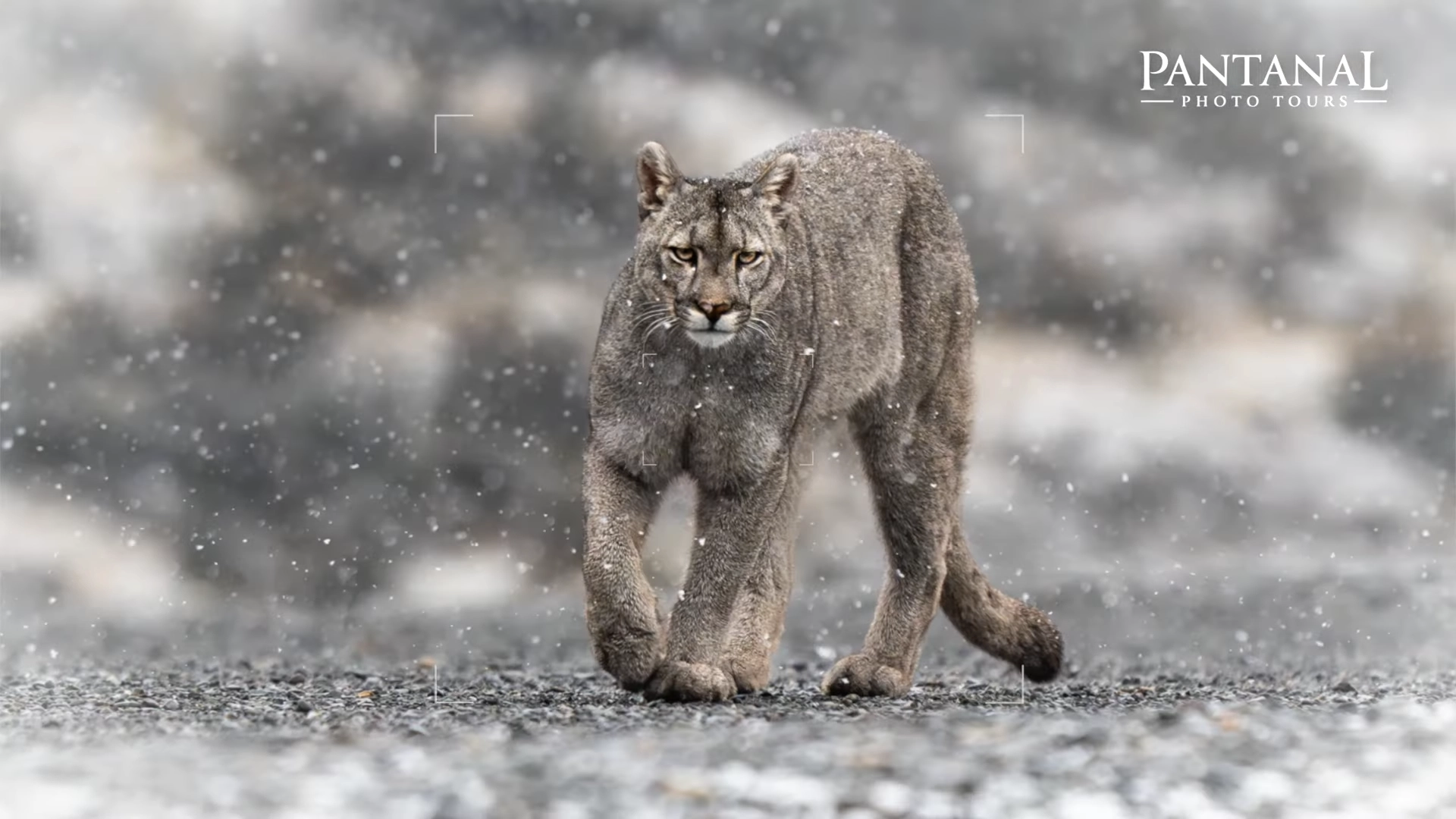
PUMAS
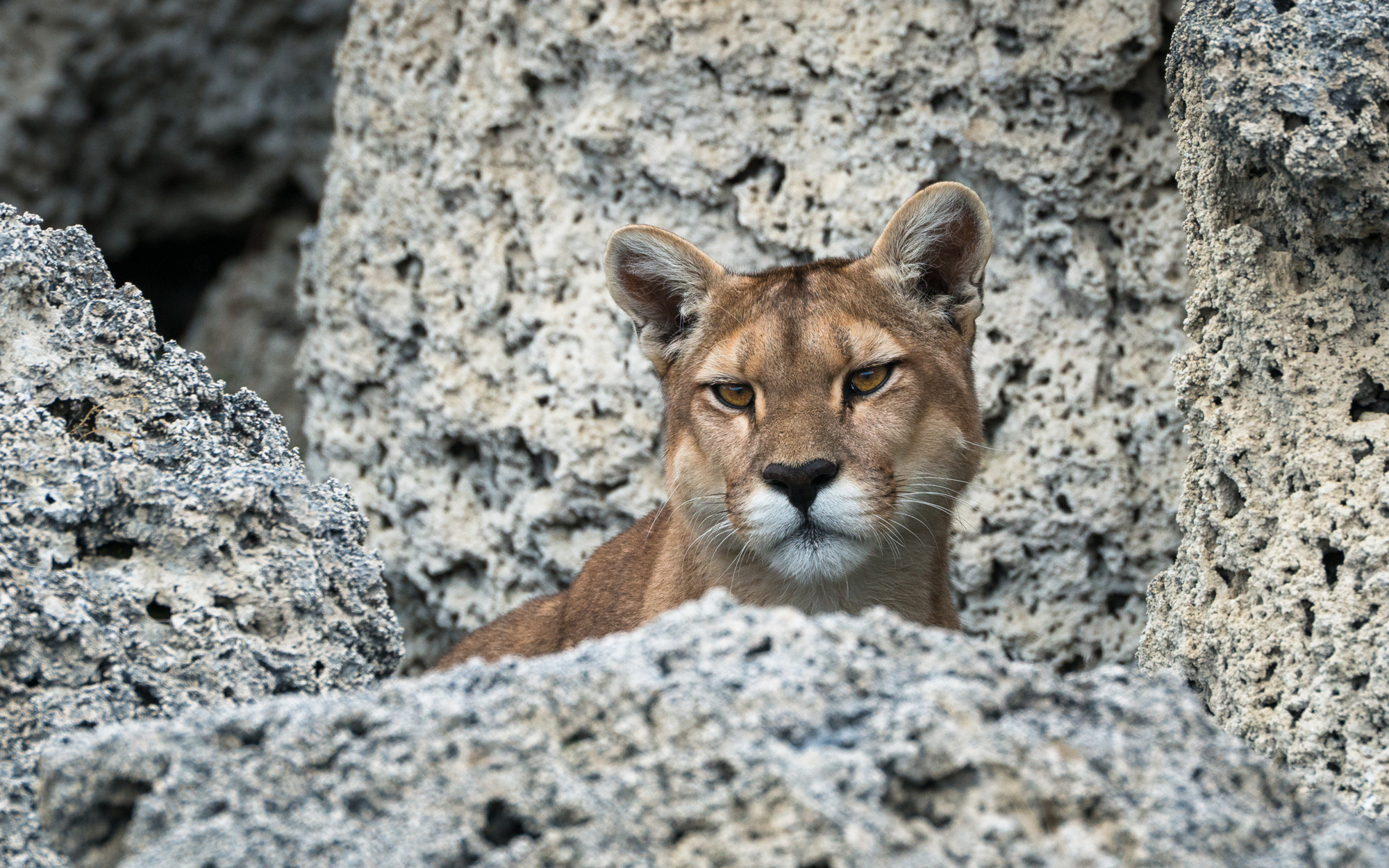
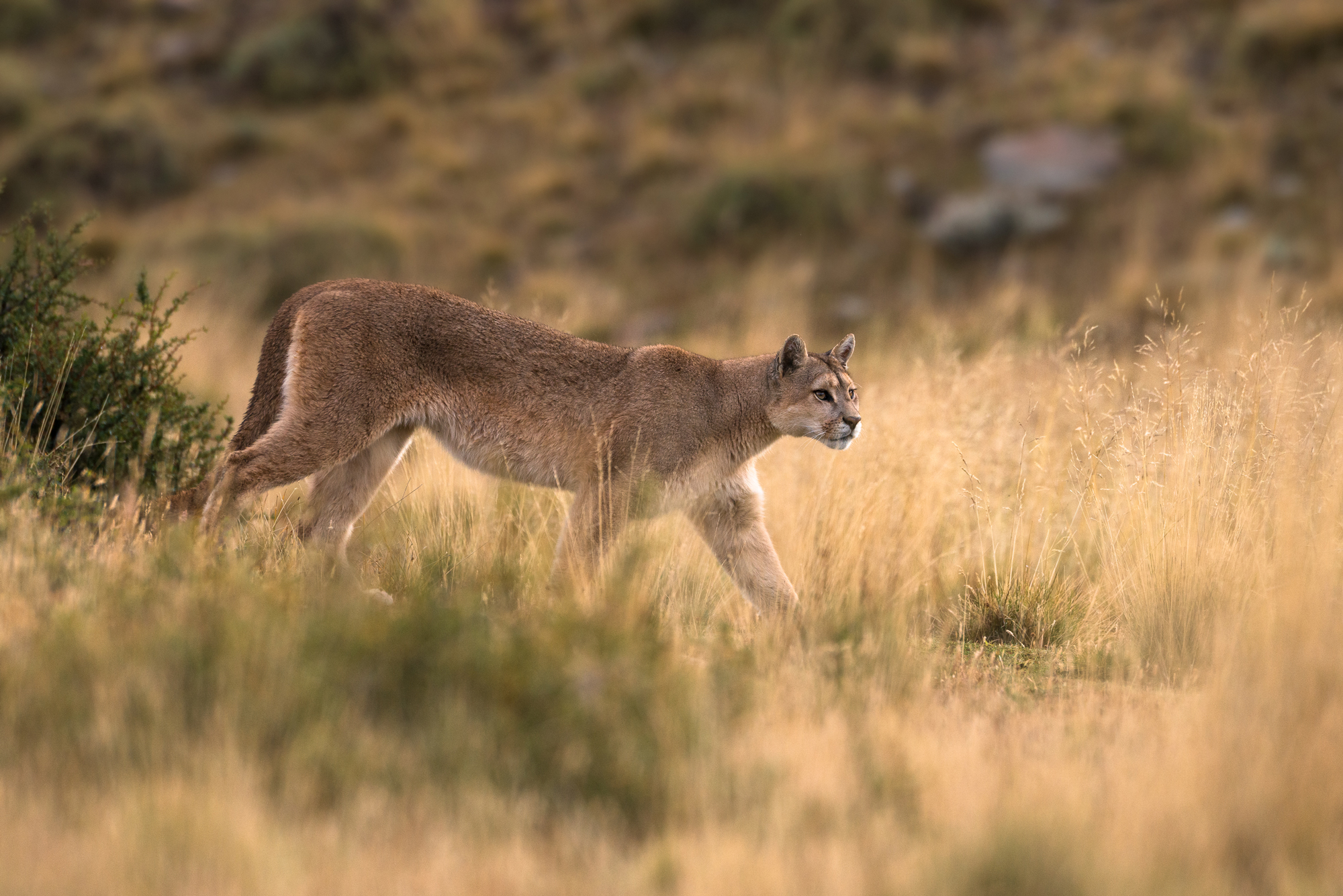
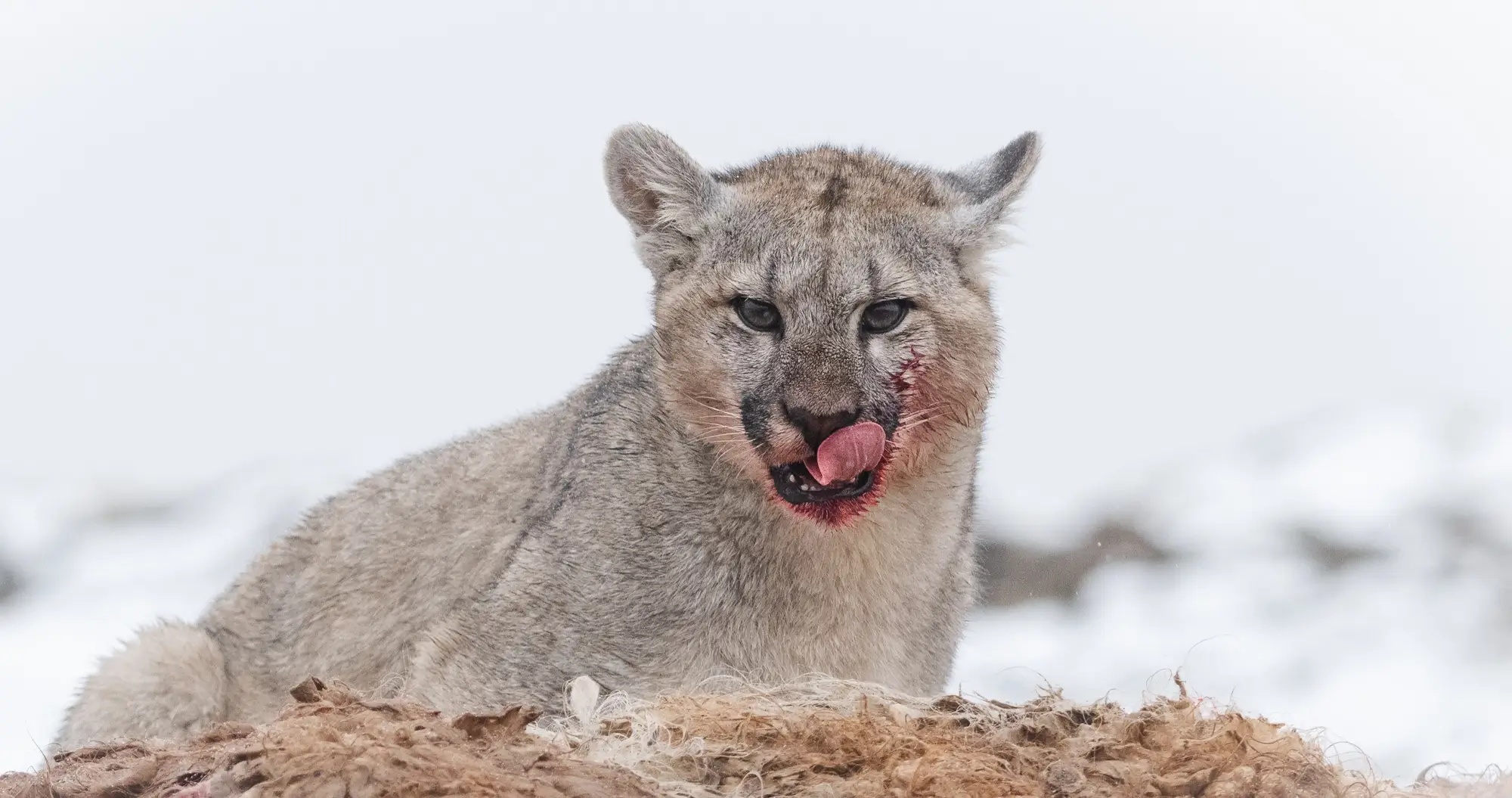
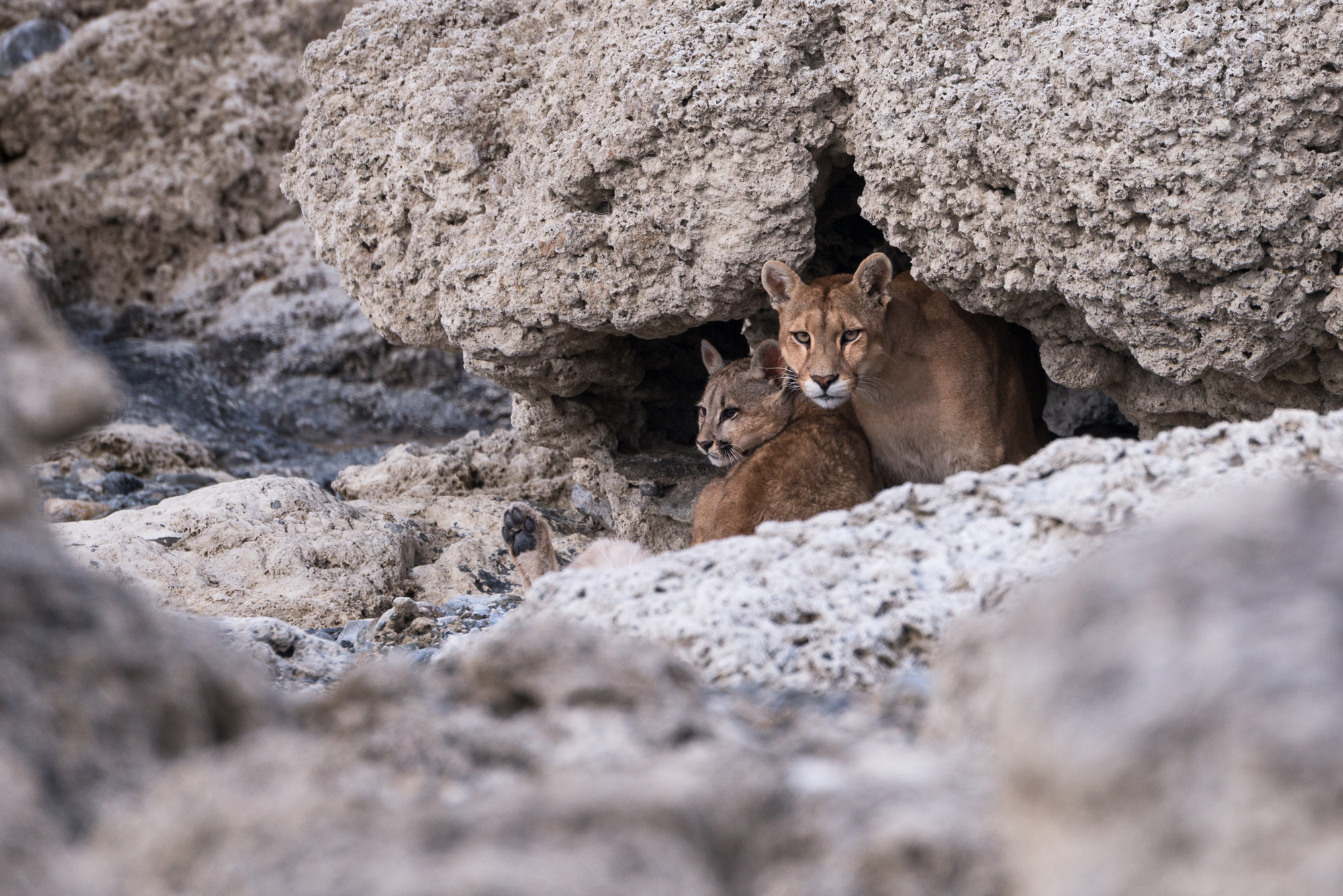
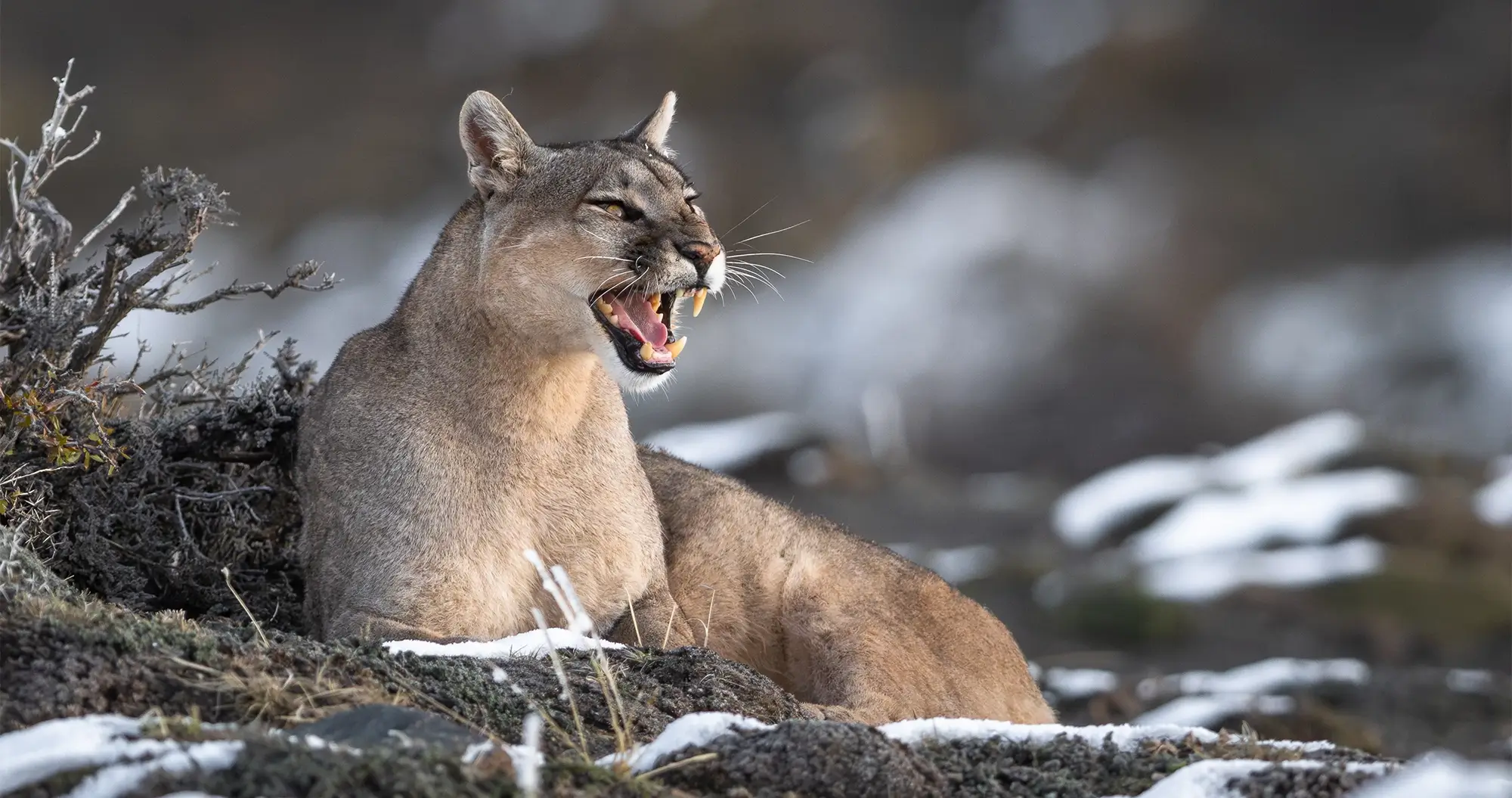
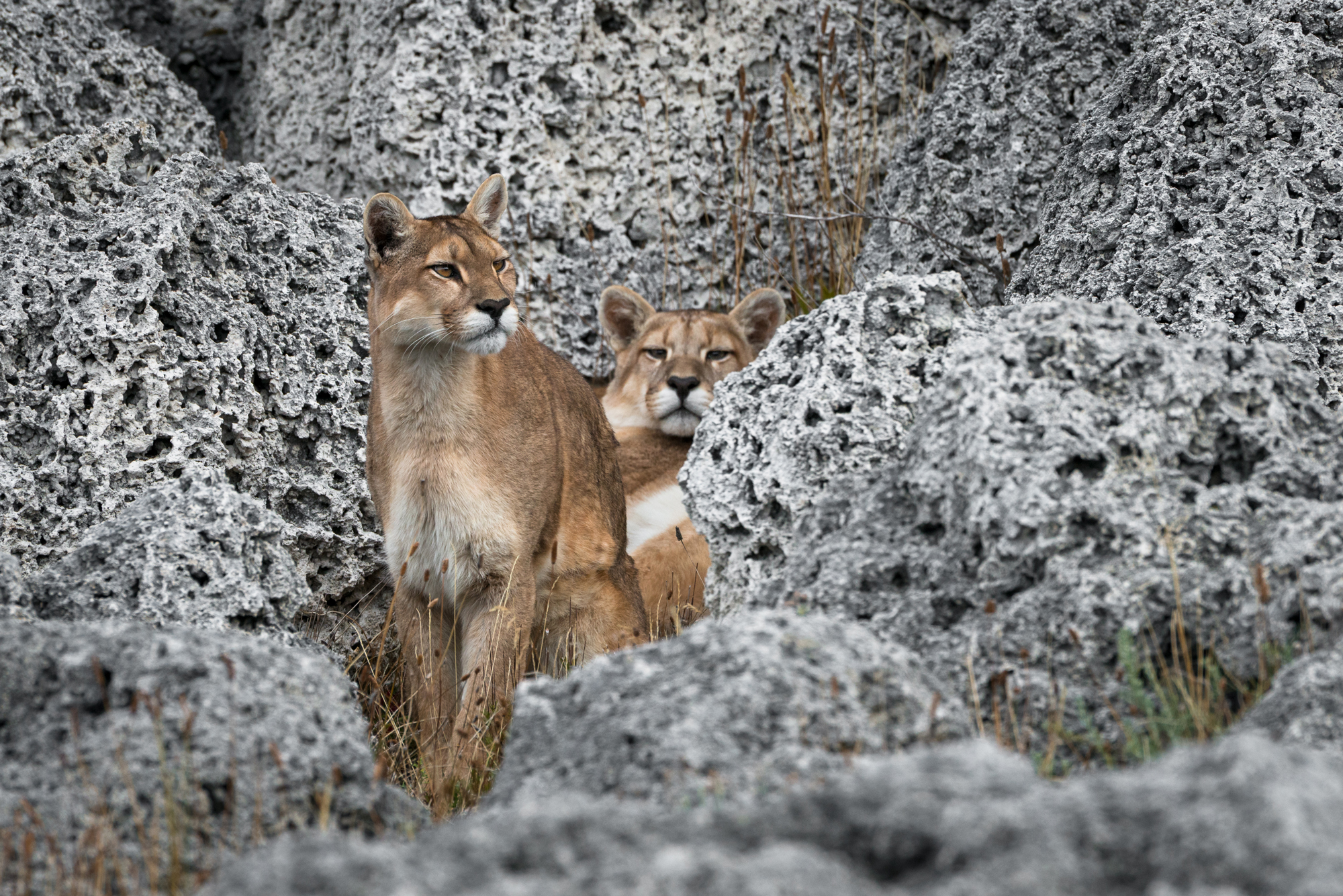
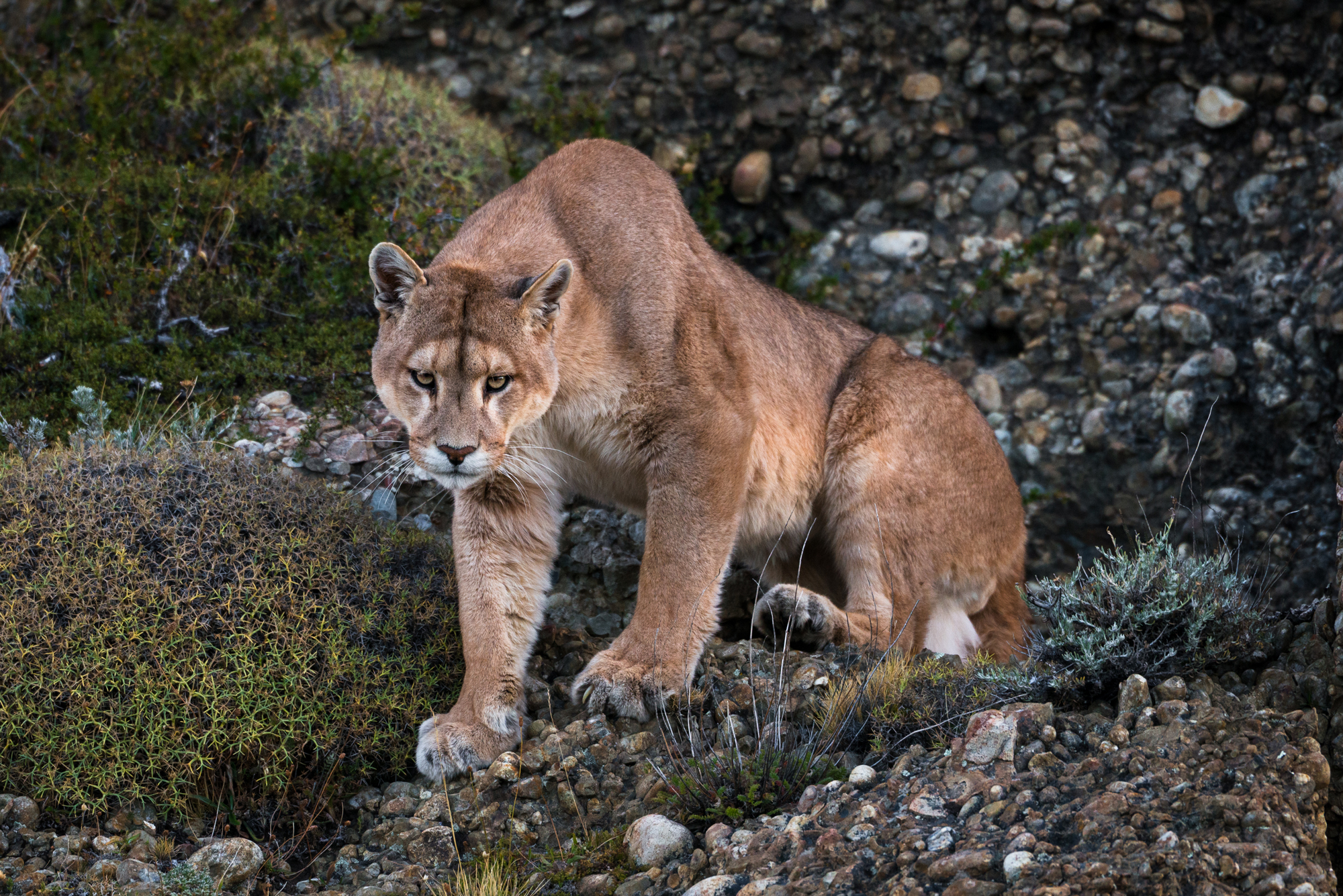
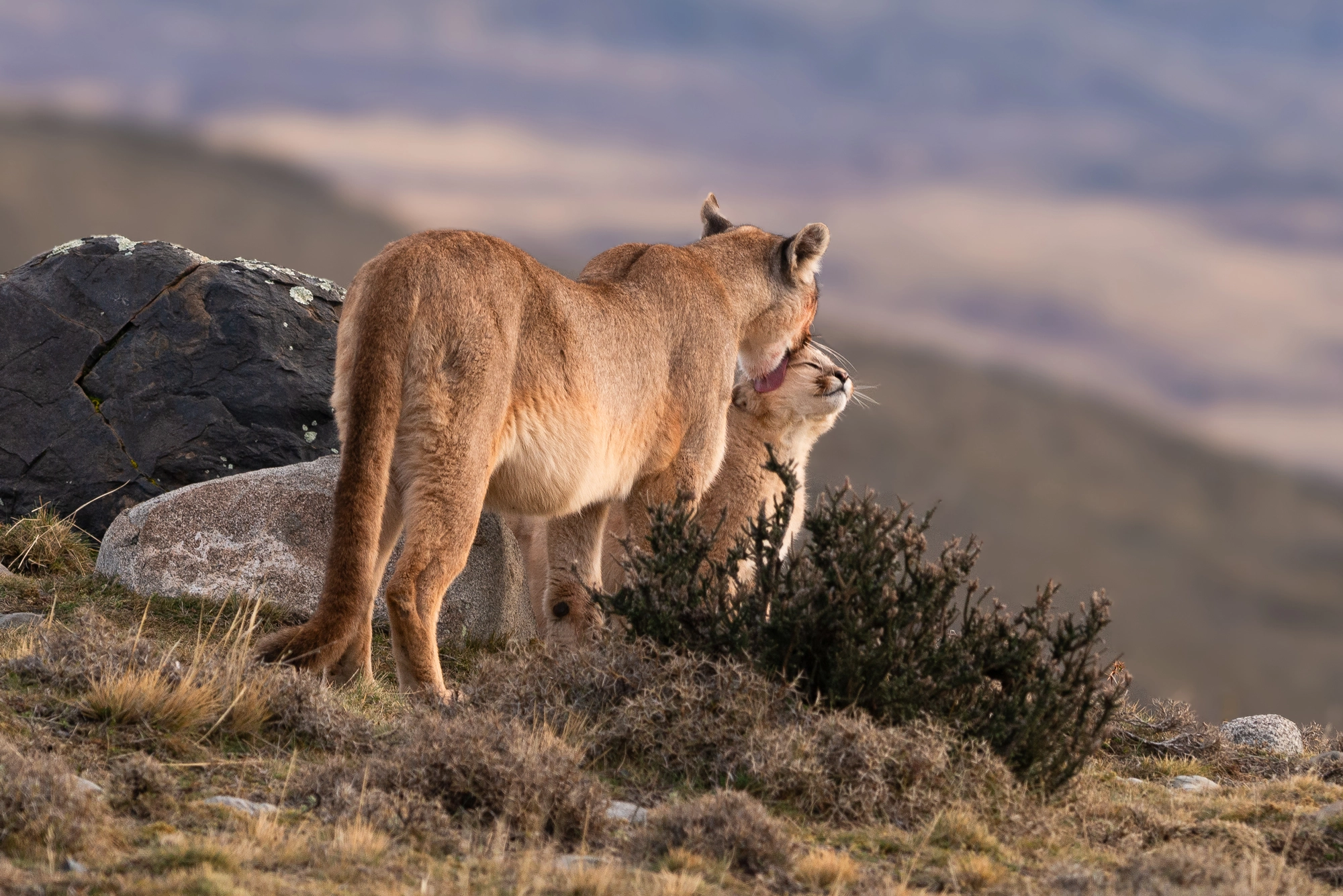
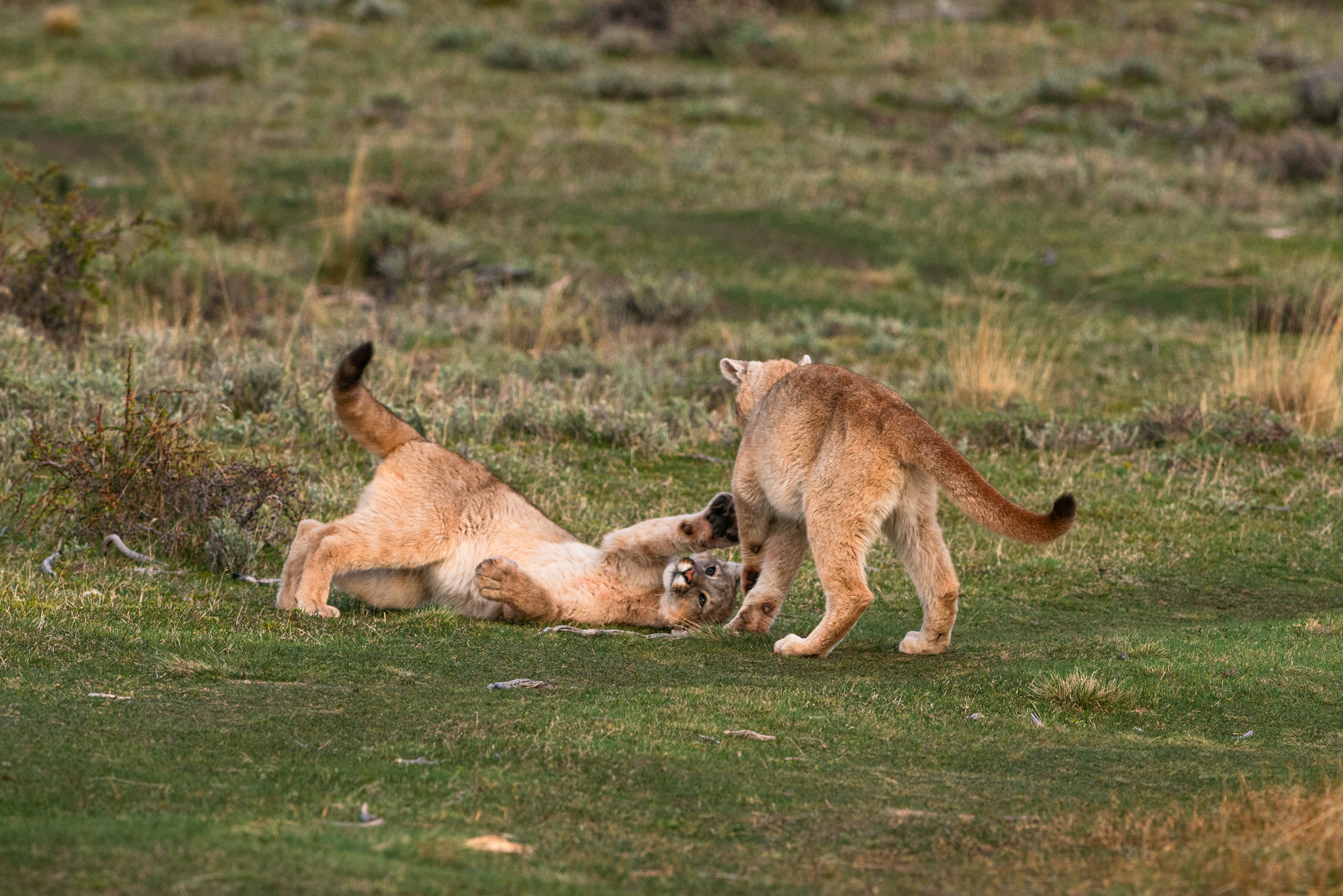
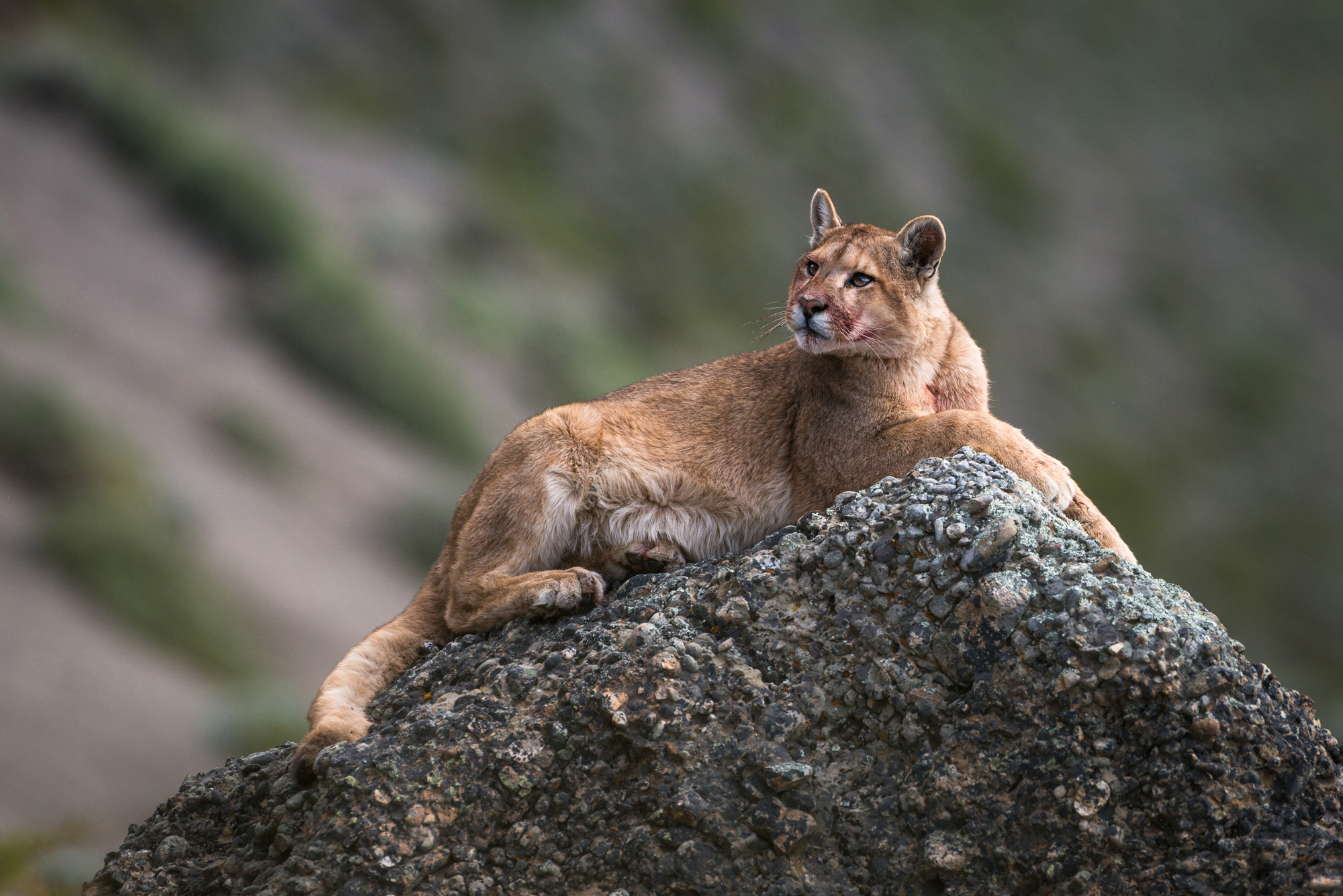
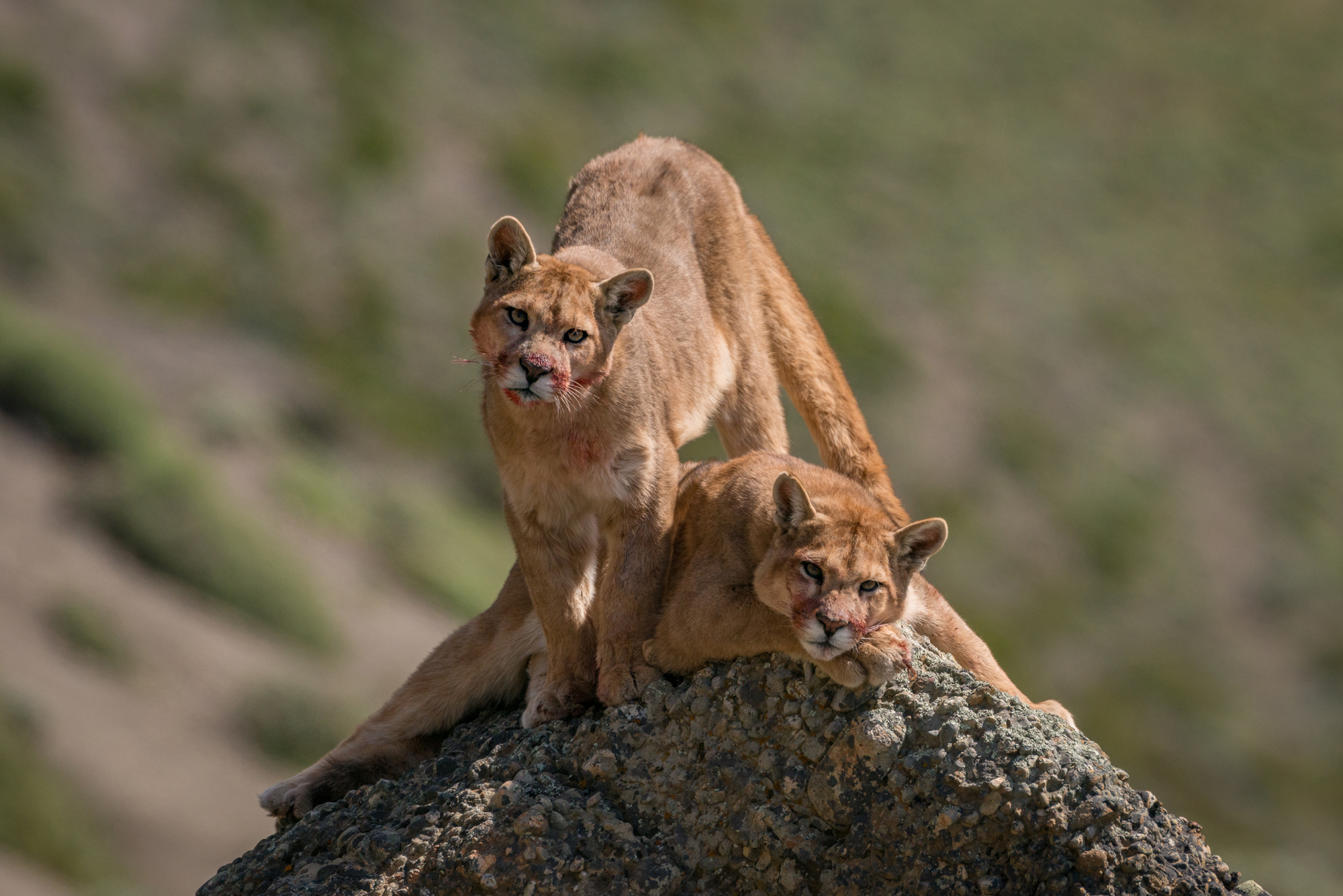
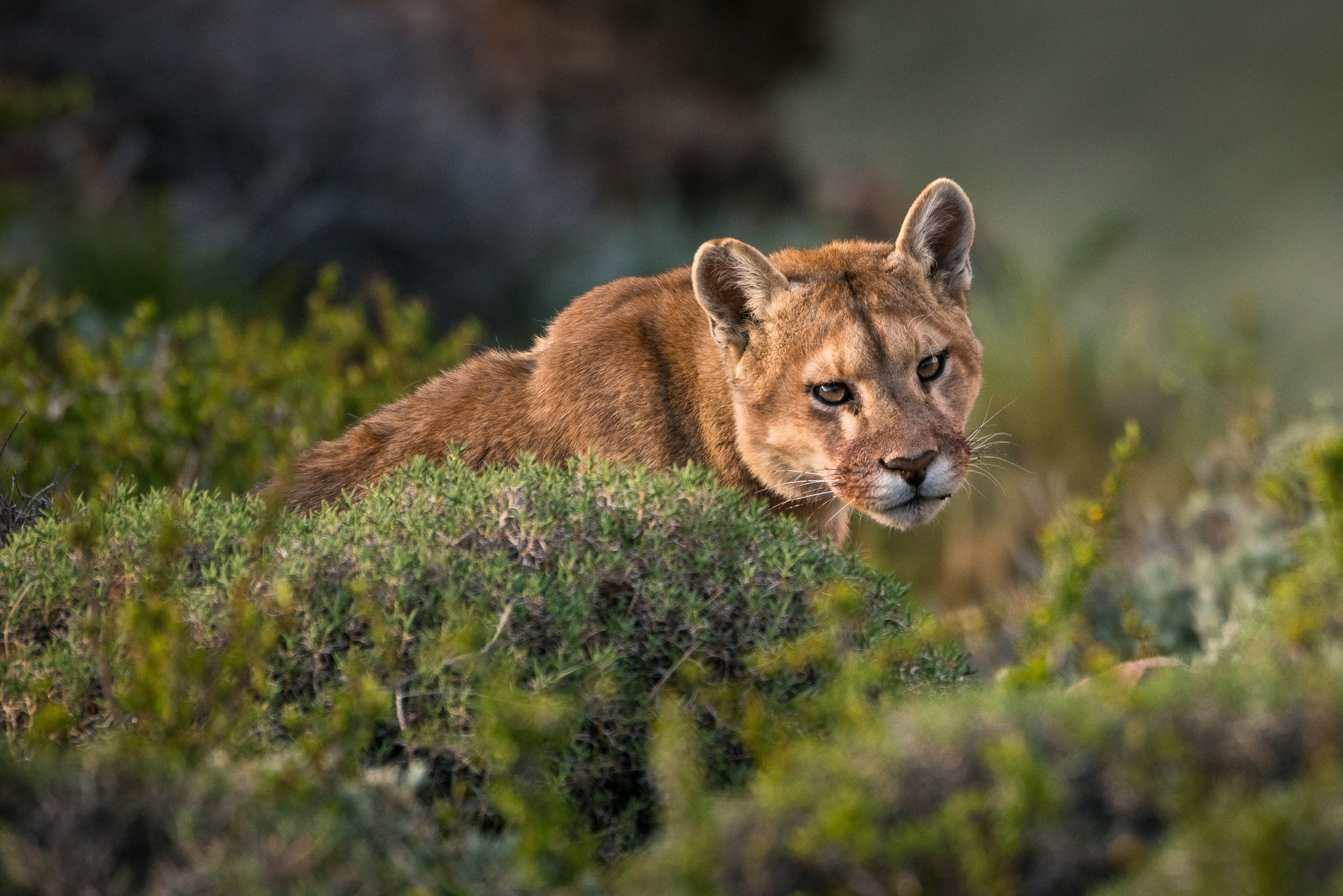
The puma (Puma concolor), also known as the mountain lion or cougar, is one of the most adaptable large felines in the Americas. With a sleek, muscular body and a tawny coat, it thrives in a wide range of habitats—from forests and deserts to mountain regions. Unlike other big cats, pumas do not roar but instead communicate through whistles, purrs, and hisses. Solitary and elusive, these carnivores rely on stealth and power to hunt deer, guanacos, and smaller prey, playing a crucial role in maintaining the balance of ecosystems where they live.
In Patagonia, the southernmost region of South America, pumas have a particularly strong presence. The vast, windswept steppes and rugged mountains provide ideal terrain for this stealthy predator. Here, they are the apex predator and mainly feed on guanacos, a native herbivore, and European hares, which were introduced to the region. These two species make up the bulk of the Patagonian puma’s diet. In recent years, the puma population in Patagonia has gained attention not only for its ecological importance but also for its role in ecotourism, with travelers eager to spot the elusive cats in places like Torres del Paine National Park. Conservation efforts are ongoing to ensure their coexistence with local ranching communities and the fragile Patagonian environment.
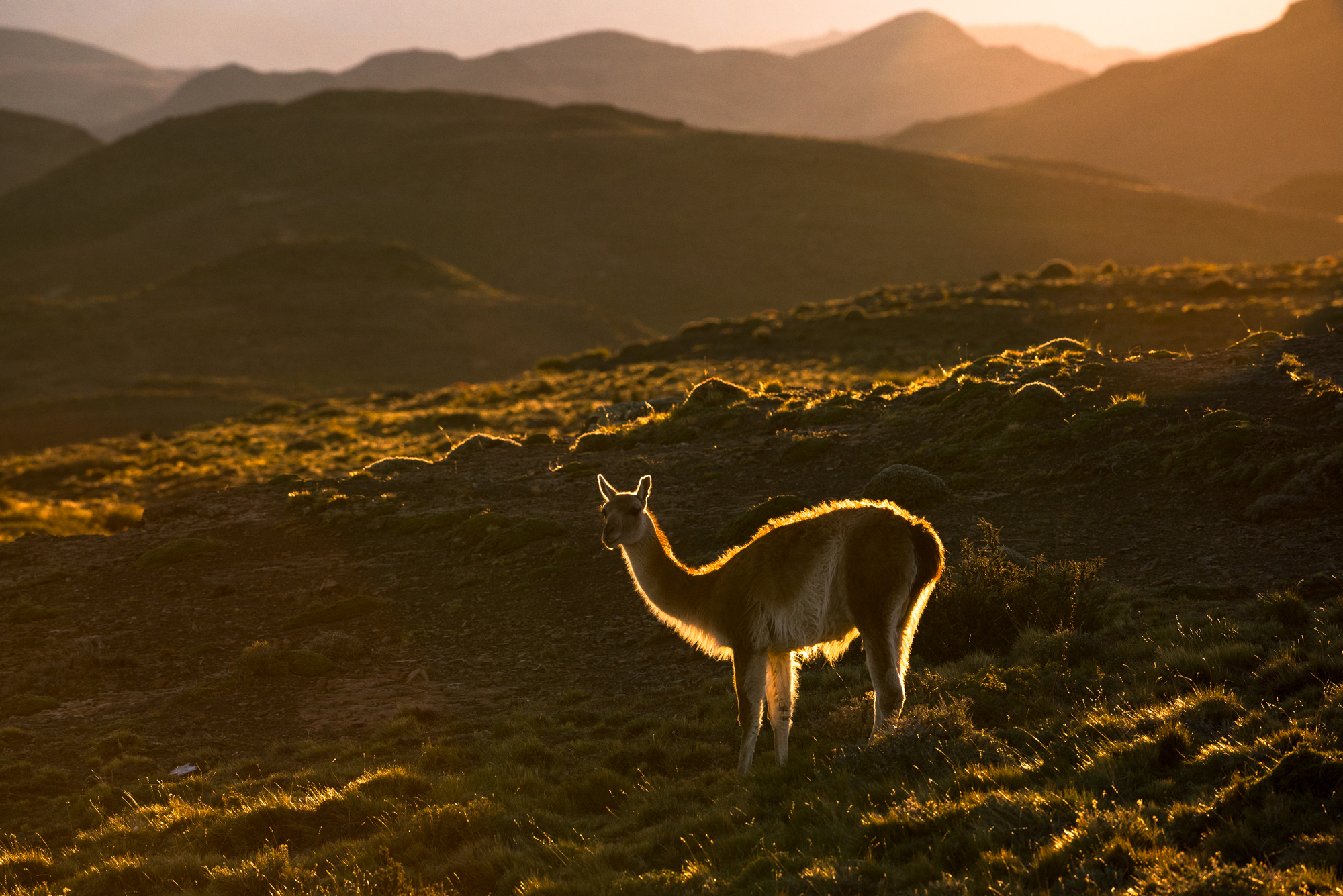
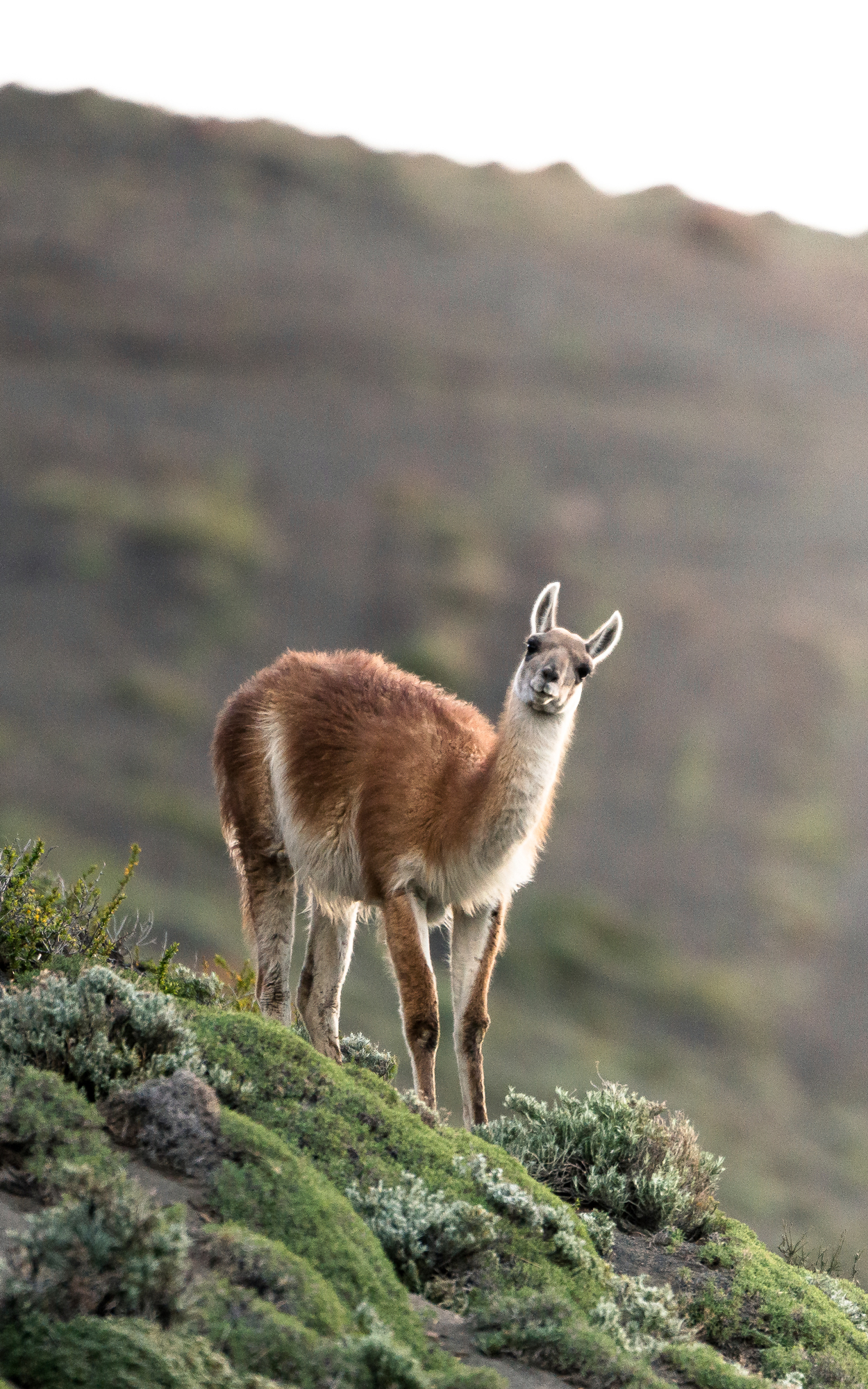
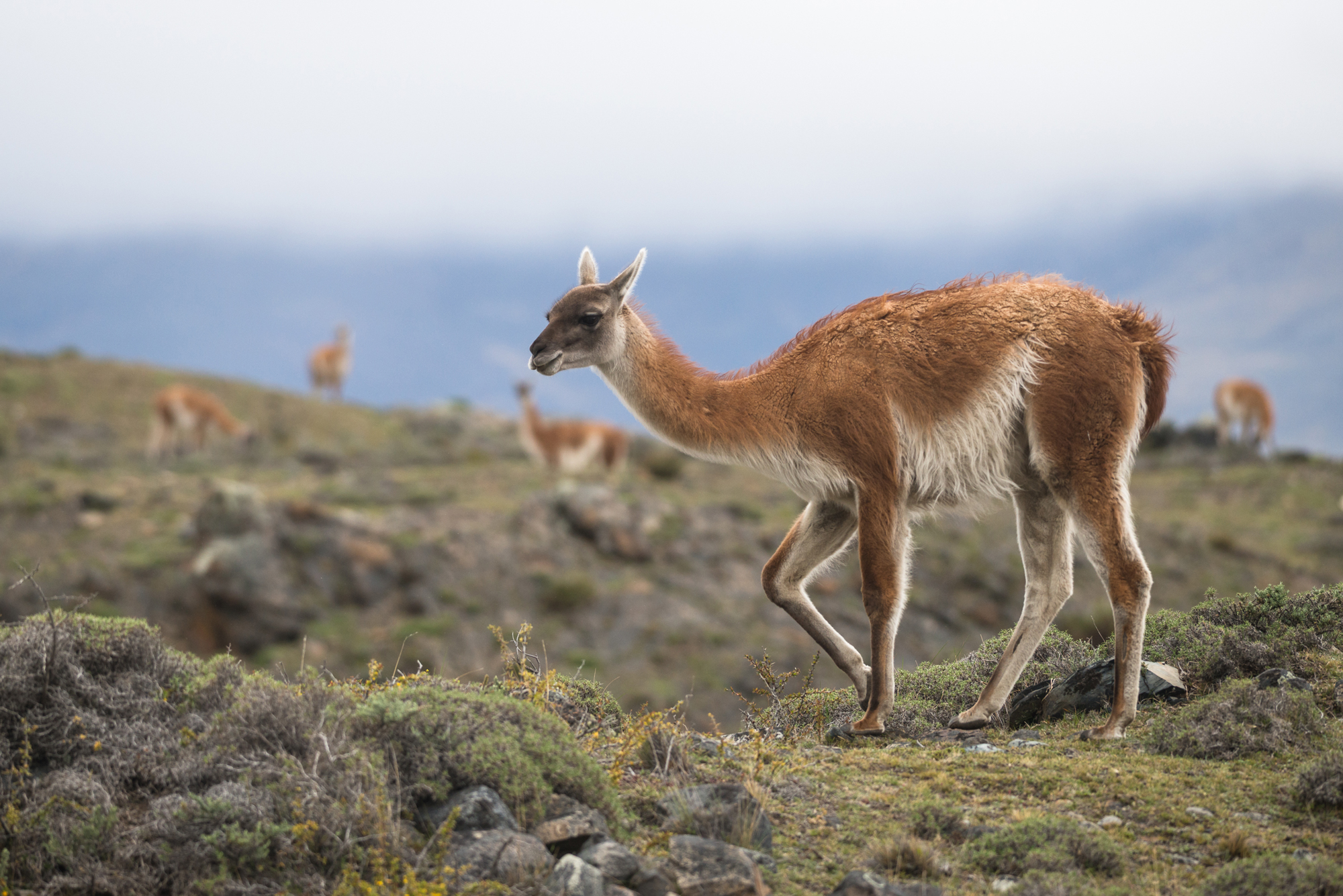
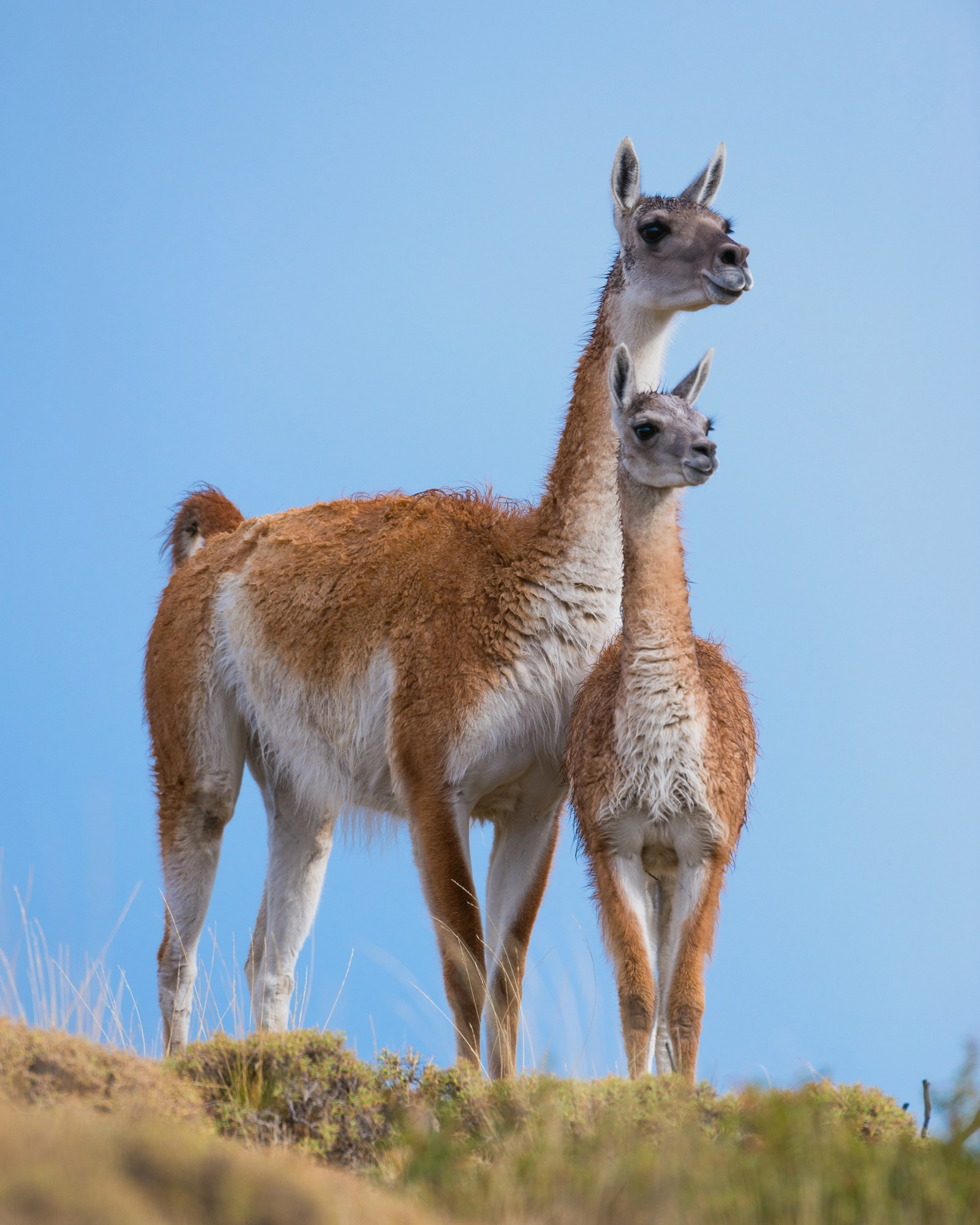
GUANACO
The guanaco (Lama guanicoe) is a wild camelid native to South America and is one of the closest relatives of the domesticated llama. With its slender body, long neck, and soft, light-brown fur, the guanaco is well adapted to the harsh environments of the Andes and Patagonia. It typically lives in small herds and is known for its agility and speed, which help it escape predators in the open steppe. Guanacos are herbivores, feeding on grasses, shrubs, and other low-lying vegetation, and play a vital role in the ecosystems they inhabit by dispersing seeds and grazing in a way that supports plant diversity.
In Patagonia, guanacos are a key species in the region’s grassland and shrubland ecosystems. They are one of the most common and important large herbivores in this vast landscape, thriving in areas with sparse vegetation and strong winds. Guanacos are also the main natural prey of the Patagonian puma, forming a critical link in the food chain. Their presence supports not only predators but also ecotourism, as herds of guanacos are a common and iconic sight in places like Torres del Paine National Park. Conservation efforts in Patagonia have helped maintain healthy guanaco populations, though habitat loss and competition with livestock remain ongoing concerns.
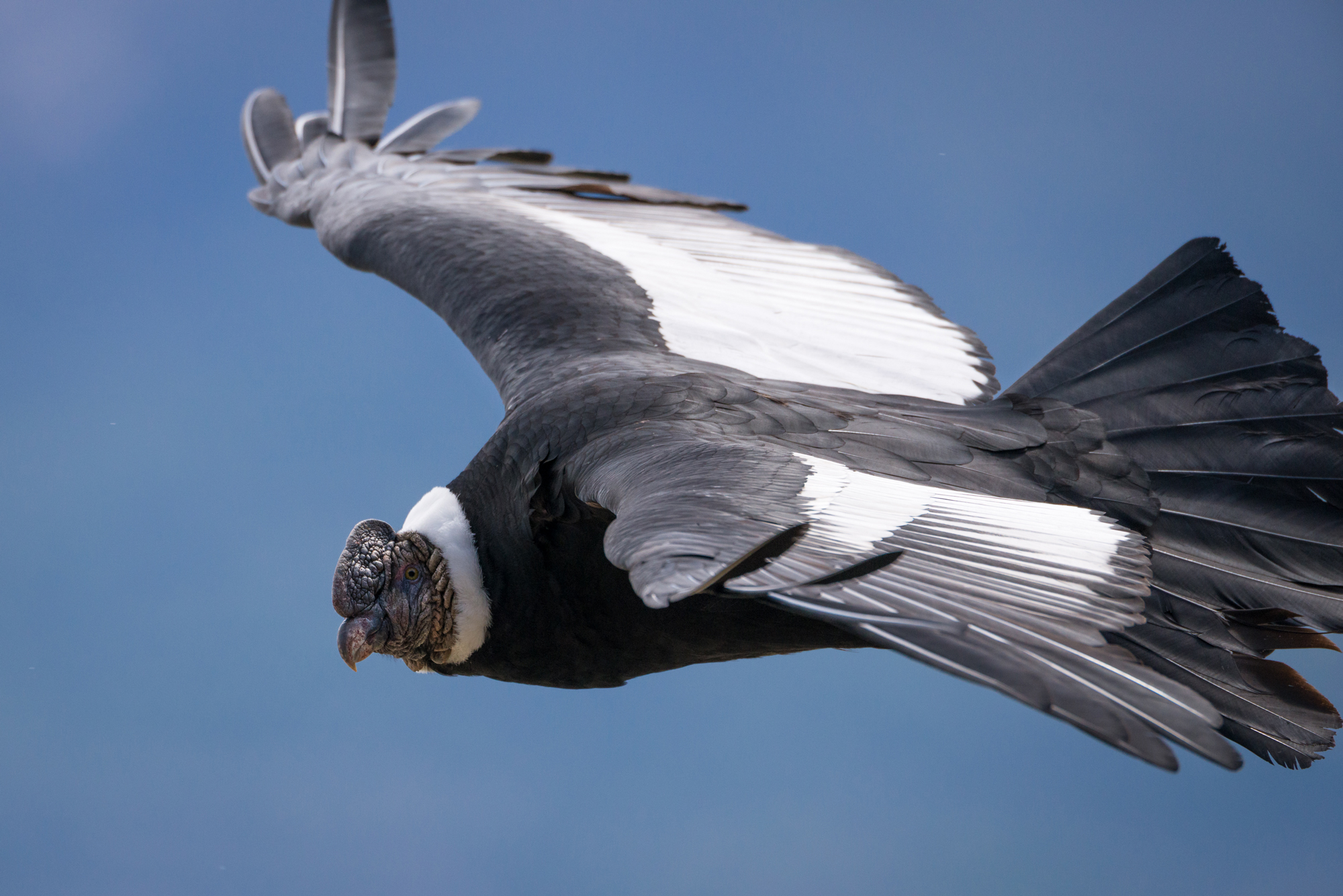
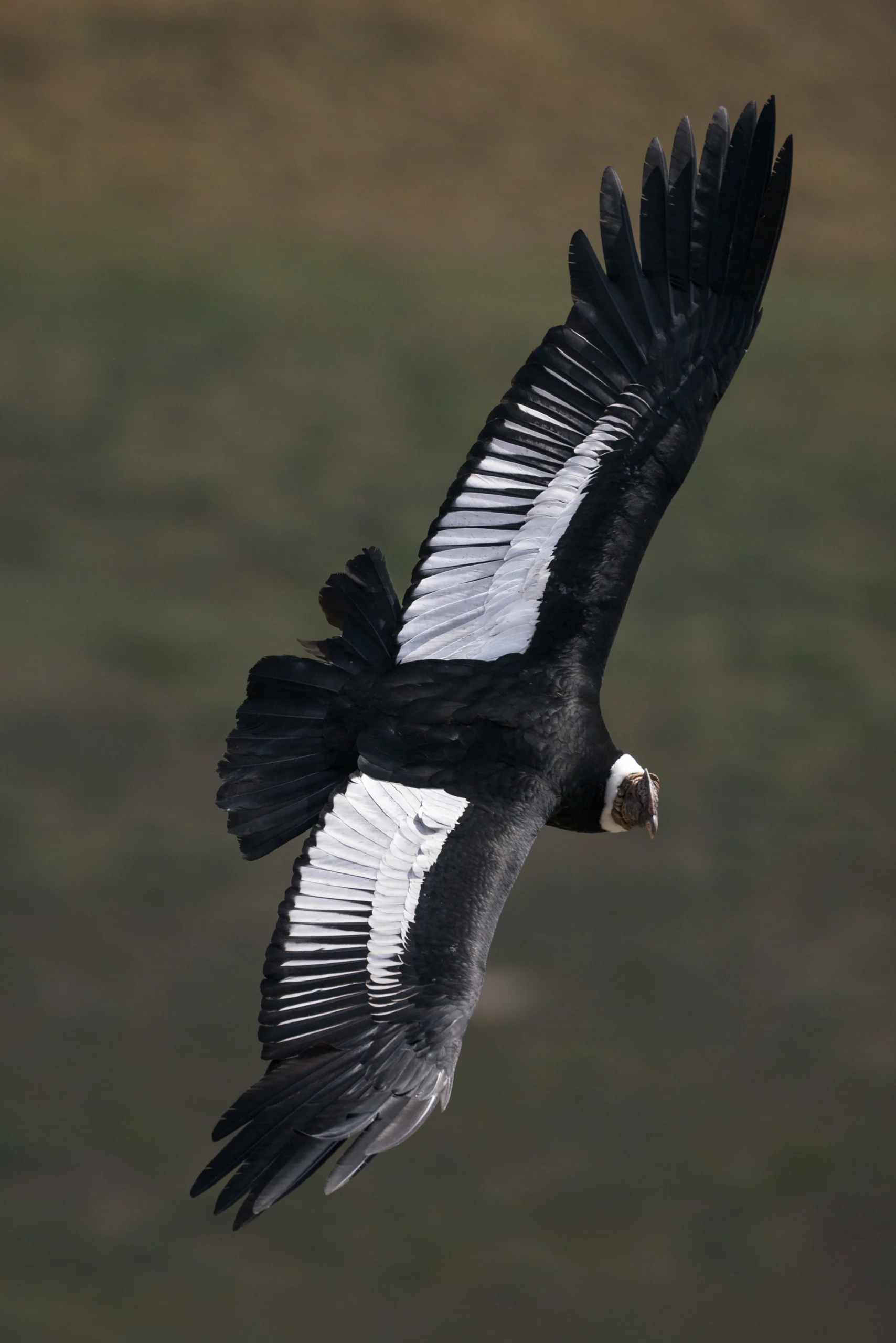
ANDEAN CONDOR
The Andean condor (Vultur gryphus) is one of the largest flying birds in the world and a symbol of power and freedom across the Andes Mountains. With an impressive wingspan that can exceed three meters (up to 10 feet), this majestic vulture soars effortlessly on thermal currents, using minimal energy to travel vast distances in search of food. Its striking black plumage, white ruff of feathers around the neck, and bare head adapted for hygiene reflect its scavenging lifestyle. As a carrion feeder, the condor plays a vital ecological role by cleaning up carcasses and helping to prevent the spread of disease.
In Patagonia, the southern range of the Andean condor, these birds can often be seen gliding above cliffs, valleys, and open steppes. They rely on the vast, open landscapes and strong winds of the region to maintain flight and locate food, which includes the remains of guanacos, sheep, and other large animals. The condor is a cultural icon in South America and an important species in conservation efforts due to its low reproductive rate and vulnerability to habitat loss, poisoning, and human disturbance. In recent years, Patagonian national parks and conservation programs have helped protect vital habitats and raise awareness about the importance of preserving this awe-inspiring scavenger.
MAGELLANIC WOODPECKER
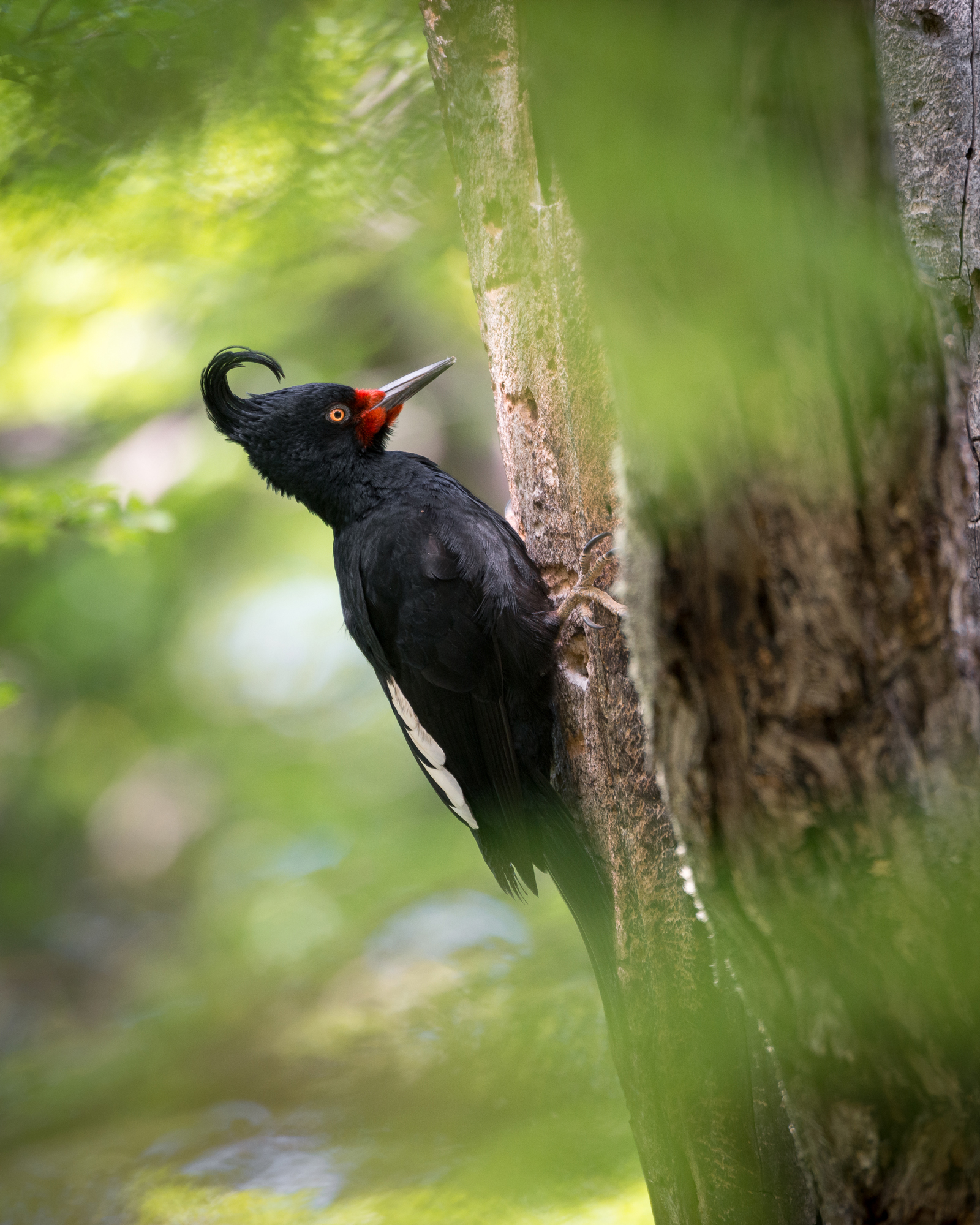
The Magellanic woodpecker (Campephilus magellanicus) is one of the largest woodpecker species in South America and a striking resident of the temperate forests of southern Chile and Argentina. Males are easily recognized by their vivid red heads, while females have a mostly black head with touches of red near the bill. Both sexes have powerful beaks and strong claws that allow them to cling to tree trunks and excavate wood in search of insects and larvae. Their loud drumming and distinctive calls echo through the forest, making them easier to hear than see in the dense canopy.
In Patagonia, the Magellanic woodpecker inhabits old-growth Nothofagus forests, where it plays a crucial ecological role. By feeding on wood-boring insects, it helps maintain forest health, and its abandoned nest cavities provide shelter for other animals like owls and small mammals. These woodpeckers are territorial and live in small family groups, often staying in the same area for years. Due to their dependence on mature forests, habitat loss is a significant threat. Conservation efforts in national parks such as Los Glaciares and Torres del Paine aim to protect these vital forest habitats and ensure the continued presence of this iconic and charismatic bird in the Patagonian landscape.
CULPEO FOX
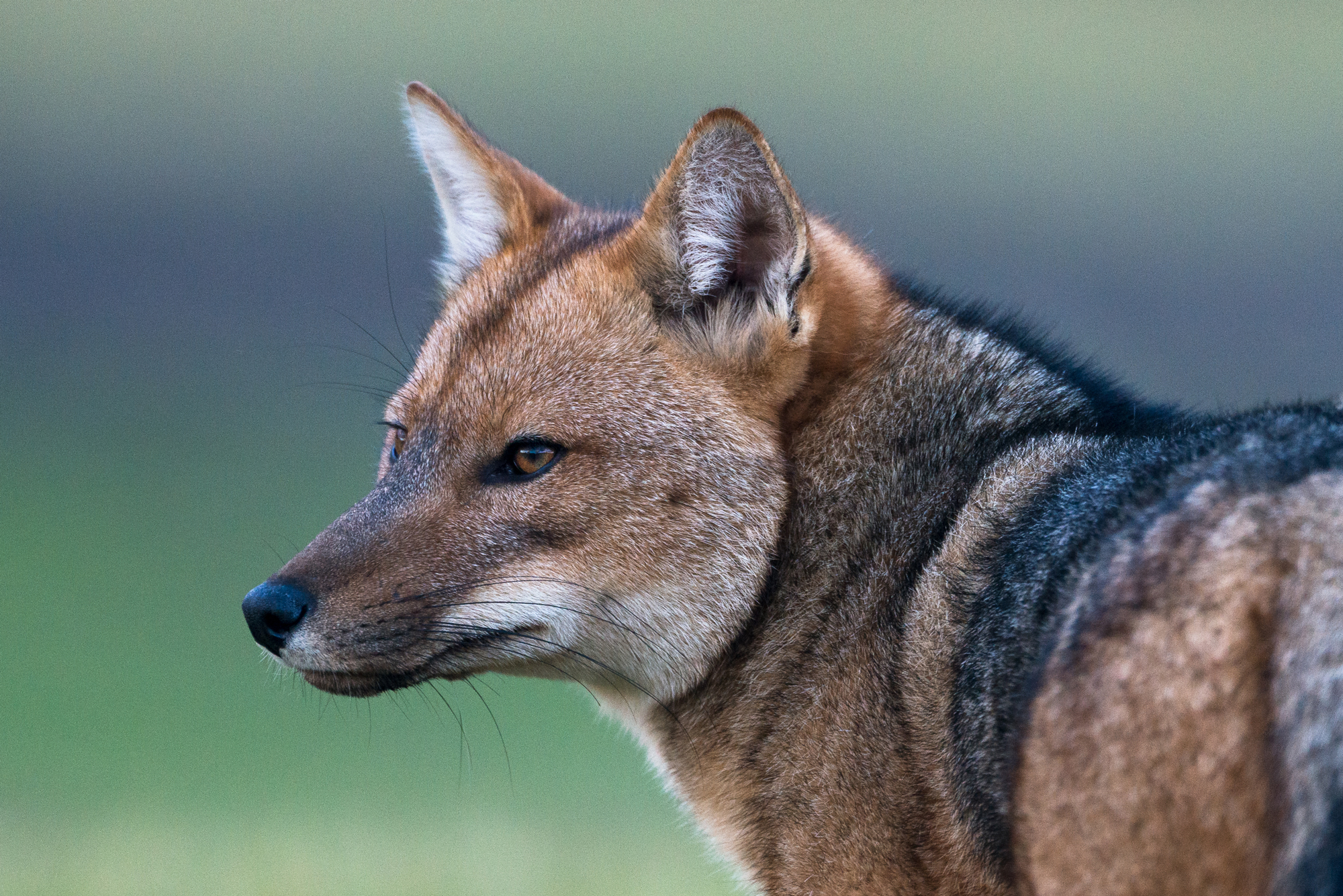
The Culpeo fox (Lycalopex culpaeus), also known as the Andean fox or Patagonian fox, is the second-largest canid in South America, resembling a small wolf with a thick, bushy tail and a reddish-gray coat. Despite its name, it is not a true fox but a member of the South American Lycalopex genus. Highly adaptable, the Culpeo inhabits a range of environments, from arid deserts and scrublands to high Andean plateaus and Patagonian steppes. It is an opportunistic omnivore, feeding on rodents, birds, insects, fruits, and carrion—sometimes even preying on livestock, which can lead to conflict with humans.
In Patagonia, the Culpeo plays an important role in controlling rodent populations and maintaining ecological balance. It is often seen trotting through open grasslands or along rocky slopes, usually alone or in pairs. Though relatively common, it faces threats from habitat fragmentation, persecution by ranchers, and diseases transmitted by domestic dogs. Conservation initiatives in Patagonian parks and protected areas aim to mitigate these threats and promote coexistence between wildlife and human activities. As a key predator in the region’s food web, the Culpeo fox contributes to the health and stability of Patagonian ecosystems.
AUSTRAL PYGMY-OWL
The Austral pygmy-owl (Glaucidium nanum) is one of the smallest owls in South America, measuring just around 20 centimeters (8 inches) in length. Despite its size, this little raptor is a fierce and agile hunter, preying on insects, small mammals, reptiles, and even other birds. It is easily recognized by its compact, round body, yellow eyes, and “false eyes” on the back of its head, which help deter predators. Unlike many owls, the Austral pygmy-owl is often active during the day (diurnal), especially at dawn and dusk, and its repetitive, high-pitched call can often be heard echoing through the southern forests.
In Patagonia, the Austral pygmy-owl inhabits temperate forests and woodland edges, often perching quietly in the lower branches of trees while scanning for movement below. Its presence is an important indicator of forest health, as it relies on diverse, structurally complex habitats to find both prey and nesting sites—typically using tree cavities. Though relatively common, it faces threats from deforestation and habitat degradation. Conservation of native forests in regions like Patagonia is essential for maintaining stable populations of this charismatic and ecologically valuable owl.

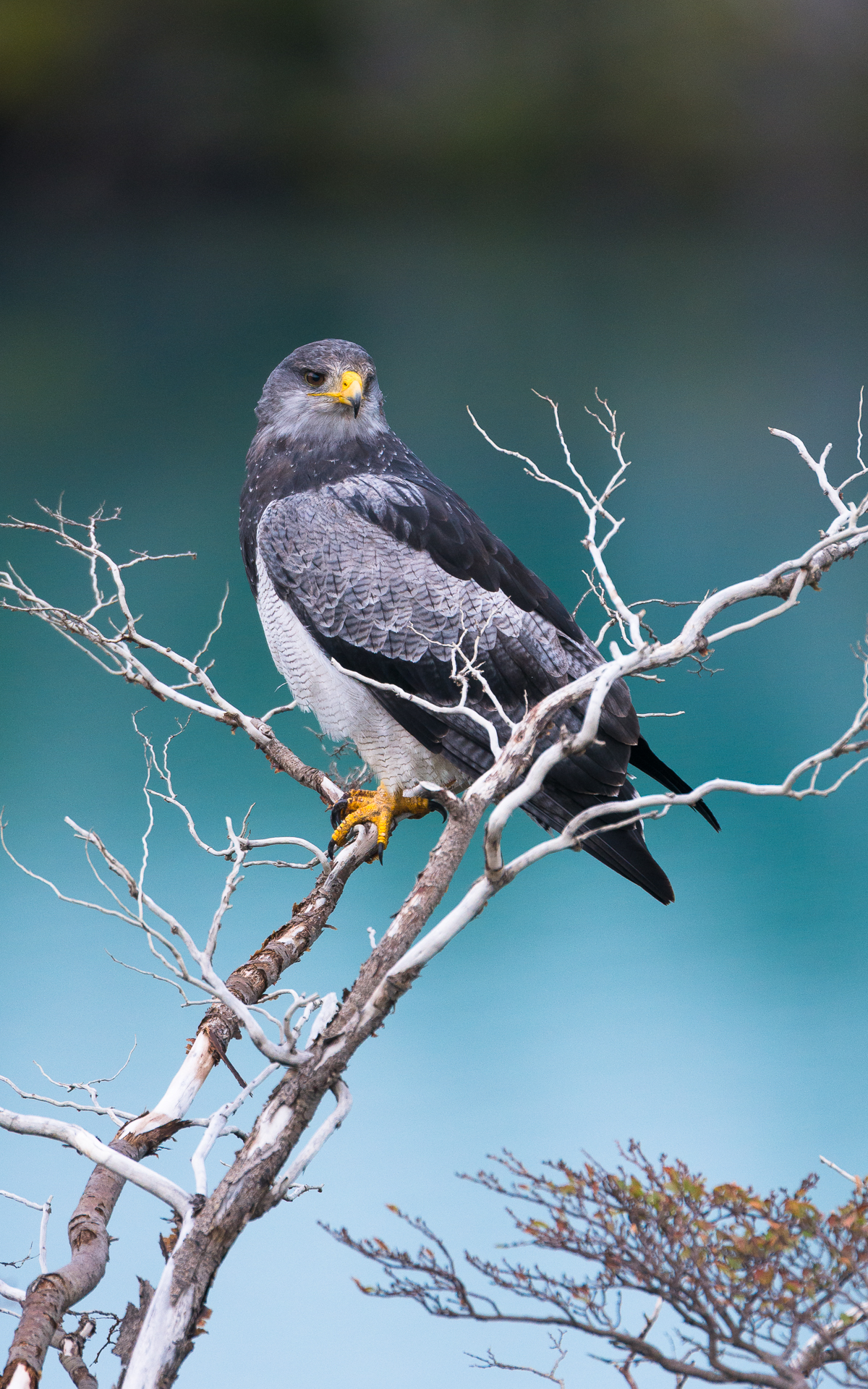
BLACK-CHESTED BUZZARD EAGLE
The Black-chested buzzard eagle (Geranoaetus melanoleucus) is a large, striking raptor native to the southern regions of South America. With a wingspan of up to 1.8 meters (nearly 6 feet), this eagle is easily recognized by its dark, almost black chest and head, which contrasts with its white underparts and powerful build. Known for its exceptional flying abilities, the Black-chested buzzard eagle soars gracefully over the open grasslands, cliffs, and mountains, hunting a variety of prey including small mammals, birds, and reptiles. Its keen eyesight allows it to spot potential prey from great distances, swooping down with impressive speed and precision.
In Patagonia, this majestic eagle is an apex predator of the region’s open steppes and mountainous terrain. It plays a crucial role in regulating populations of smaller animals, such as rodents and rabbits, and often scavenges carrion as well. The Black-chested buzzard eagle is known for its territorial behavior, often nesting in tall trees or cliffs and fiercely defending its territory. While the species is not considered endangered, habitat loss due to agriculture and human encroachment remains a concern. Conservation efforts in Patagonia focus on preserving the open landscapes that are essential for this impressive eagle’s survival, ensuring that it continues to dominate the skies of southern South America.
HUEMUL
The huemul (Hippocamelus bisulcus) is a rare and endangered deer species native to the southern Andes, particularly in Patagonia. Characterized by its stocky build, short legs, and thick, dark fur, the huemul is well adapted to the harsh, mountainous environments it inhabits. These herbivores are typically found in the temperate forests and high-altitude grasslands of southern Chile and Argentina. They feed on grasses, shrubs, and the bark of trees, often seeking shelter in the dense forests or steep, rugged terrain to avoid predators. Their antlers, present only in males, are relatively small compared to other deer species, further distinguishing them.
In Patagonia, the huemul is considered a symbol of the region’s wildlife, though its population has drastically declined due to habitat loss, hunting, and competition with livestock. Conservation efforts are critical to preserving this species, with programs focused on protecting its fragile habitats in places like Torres del Paine National Park. The huemul’s survival is threatened by fragmentation of its environment, but ongoing conservation initiatives aim to restore its populations and ensure that this iconic Patagonian deer continues to roam the southern Andes.
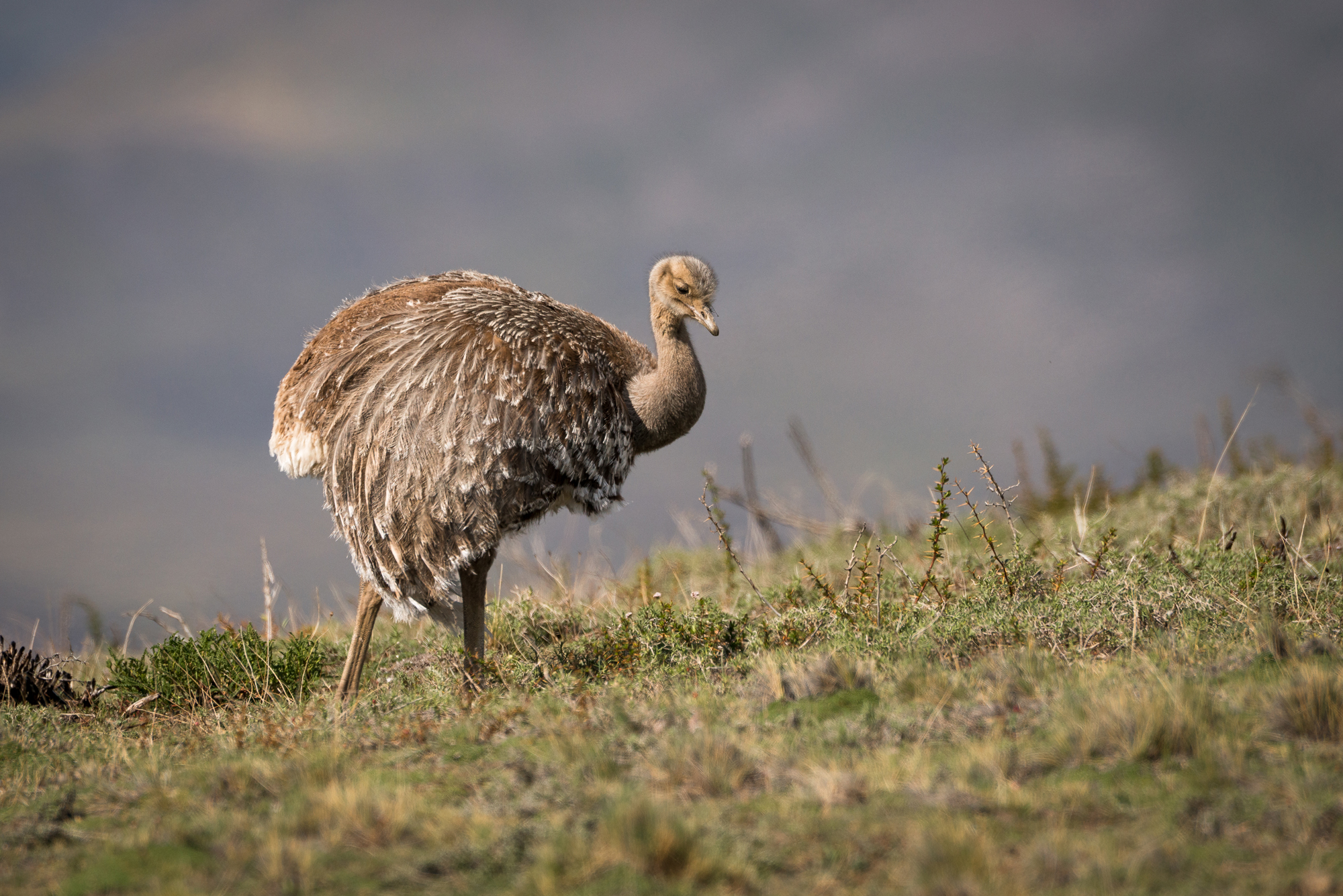
DARWIN'S RHEA
Darwin’s rhea (Rhea pennata), also known as the Lesser Rhea, is a large, flightless bird native to the open grasslands, scrublands, and steppes of southern South America, particularly in Patagonia. It is the smaller of the two rhea species found in the continent, with long legs, a grayish-brown plumage, and a distinctive, small head. As a flightless bird, the Darwin’s rhea is an excellent runner, capable of reaching speeds of up to 60 kilometers per hour (37 mph) when fleeing predators. It primarily feeds on grasses, fruits, seeds, and insects, and lives in herds, which provides protection against potential threats such as pumas and other carnivores.
In Patagonia, Darwin’s rhea is a key species in the ecosystem, helping to maintain the balance of plant and insect populations. These birds often roam the vast, open landscapes in search of food, especially in the Patagonian steppe. While the species is not yet endangered, it faces challenges from habitat destruction due to agriculture, hunting, and competition with introduced species. Conservation efforts in the region aim to protect the natural habitats of the Darwin’s Rhea and mitigate the pressures of human development, ensuring the continued presence of this unique and iconic bird in Patagonia’s wild landscapes.
Quick links
Projects we support


Contact info
-
Phone/WhatsApp
(+55 12) 98848-3939 - info@patagoniaphototours.com
Fully licensed company
Quick links
Projects we support
Contact info
-
Phone/WhatsApp
(+55 12) 98848-3939 - info@patagoniaphototours.com
Fully licensed company

Copyright © 2025. All rights reserved.
Campos Salles Turismo e Fotogr. Ltda. CNPJ/Cadastur: 07.452.401/0001-21